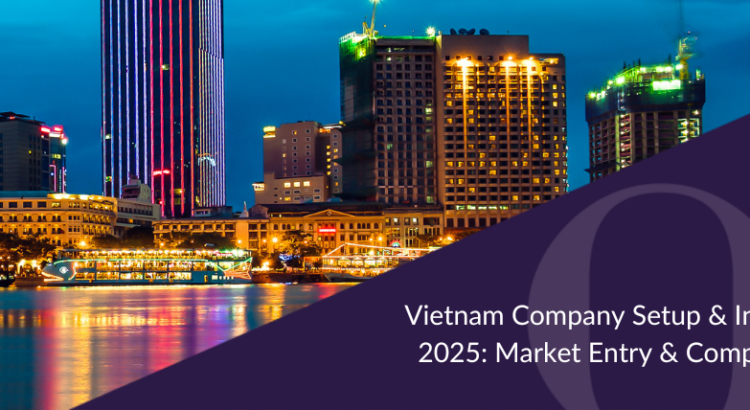
Vietnam Company Setup & Investment Law 2025: Market Entry & Compliance Insights

Vietnam Company Setup & Investment Law 2025: Market Entry & Compliance Insights

Featuring legal insights from ADK Vietnam Lawyers with practical considerations by BoardRoom.

Vietnam’s Law on Investment 2025: Market Entry, Compliance and Business Setup in Vietnam

Vietnam is entering a period of dynamic growth, with inbound capital investment continuing to play a critical role in its economic trajectory. As global investment flows evolve and regional competition intensifies, the country is refining its legal framework to strengthen its position as a preferred destination for company setup and business expansion.

On 11 December 2025, the National Assembly adopted the Law on Investment 2025 (“LOI 2025”), which came into effect on 1 March 2026, replacing the Law on Investment 2020 (“LOI 2020”). The reform signals a clear transition – from attracting foreign direct investment (“FDI”) at scale to prioritising high-quality, sustainable investment activities that contribute to long-term economic value.


Note: This article is based on insights from ADK Vietnam Lawyers and is provided for general informational purposes only. It does not constitute legal advice. BoardRoom supports businesses with company incorporation in Vietnam, regulatory compliance and operational execution.

Why the LOI 2025 Matters for Businesses Expanding into Vietnam

Under the previous framework, investors frequently encountered structural challenges during market entry in Vietnam. Overlapping administrative requirements, extensive pre-approval processes and prolonged timelines created inefficiencies that could delay projects and disrupt go-to-market strategies. At the same time, limited flexibility during implementation made it more difficult for organisations to adapt once operations had commenced.

The LOI 2025 addresses these pain points by streamlining administrative processes and improving regulatory transparency. However, the significance of the reform extends beyond procedural efficiency.

As Brian Nguyen, BoardRoom Vietnam’s Country Manager, explains:

“Vietnam is making the entry process more efficient, but complexity hasn’t disappeared – it has evolved. Elements that were previously addressed upfront may now need to be managed during implementation and operations.”

This evolution signals a shift in how businesses should approach setting up a business in Vietnam – not as a one-off milestone, but as part of a broader and ongoing compliance journey.

Market Entry in Vietnam: What Has Changed Under LOI 2025

1. Permitting the Establishment of an Economic Organisation Prior to Obtaining an Investment Project

Investors can now establish a company in Vietnam before completing certain investment registration procedures, including the Investment Registration Certificate (“IRC”).

This differs from the previous model, where approval was required prior to incorporation. The new approach enables businesses to:

  • Establish an on-the-ground presence earlier
  • Initiate hiring and operational planning
  • Respond more quickly to market opportunities

However, faster setup does not eliminate regulatory obligations.

“Speed gives you entry, but not certainty,” Brian points out. “You can set up faster, but if licensing, capital contribution and compliance aren’t properly aligned, that early advantage can create downstream issues.”

The IRC remains mandatory and capital contribution timelines continue to apply. Without effective coordination across legal, financial and operational functions, gaps may emerge leading to compliance exposure or implementation delays.

2. Narrowing the Scope of Investment Policy Approval

The LOI 2025 refines the scope of investment policy approval to focus on large-scale, sensitive, land-related, or high environmental impact projects.

This reduces the number of projects subject to lengthy pre-approval processes, enabling faster execution.

3. Expansion of Projects Eligible for Special Investment Procedures – The “Green Channel” Mechanism

The “green channel” mechanism introduced under LOI 2020 exempts eligible projects from investment policy approval, environmental assessments and construction permits, requiring only a written compliance undertaking.

Previously limited to selected technology projects, the LOI 2025 extends this to all sectors within designated zones.

This significantly accelerates project timelines and reduces administrative burden.

4. Changes to Conditional Business Lines and Sectors

The LOI 2025 authorises the Government to define and regulate investment and business conditions for selected sectors through two clear categories:

  1. Sectors that still require licences or approvals before operations can begin;
  2. Sectors that will move to a disclosure-based approach, where businesses only need to meet stated requirements and will be subject to post-licensing supervision.

Currently, most conditional sectors under the LOI 2020 operate under a pre-approval regime. However, some do not require such upfront control and can be effectively managed through post-approval oversight.

This shift enables a more risk-based regulatory approach, freeing low-risk sectors while maintaining oversight where it matters most.

5. The “One-Stop” Mechanism, Electronic Procedures, and Their Impact on Foreign Investors

The LOI 2025 strengthens the “one-stop” mechanism by integrating project registration, amendments and reporting into a single digital system – the National Investment Information System, reducing paperwork and fragmented approvals.

As entry becomes simpler, post-approval supervision increases, requiring businesses to prioritise ongoing compliance. Early-stage risks, such as inconsistent local implementation and delays in guidance, should be closely monitored.

“The changes don’t necessarily mean less regulation, it means accountability begins earlier,” Brian emphasises.

“While entry becomes more straightforward, maintaining compliance is more closely integrated into day-to-day operations.”

In essence, the reform moves complexity from entry to execution.

Executing Successfully: Aligning Market Entry with Compliance

The LOI 2025 marks a shift from approval-driven entry to execution-driven success.

“The companies that succeed aren’t the fastest to enter, but the most disciplined in how they operate,” Brian concludes.

For businesses, this means shifting focus from simply entering the market to building the capabilities required to operate, stay compliant and scale effectively in Vietnam.

How BoardRoom Supports Company Setup and Compliance in Vietnam

Through our partnership with ADK Vietnam Lawyers, BoardRoom supports organisations in translating regulatory requirements into practical and sustainable business operations.

From company incorporation in Vietnam through to ongoing compliance and financial reporting, we help establish the foundations required for long-term success, ensuring alignment between legal obligations and day-to-day execution.

Contact us for guidance on company incorporation, compliance and operational setup.

Contact BoardRoom for more information:

Brian Nguyen_grey bg

Brian Nguyen

Country Manager,
BoardRoom Vietnam

E: [email protected]

Source & Attribution

This article is adapted from insights by ADK Vietnam Lawyers: Foreign Investment In Vietnam Under Law Of Investment 2025: Towards Simplification Of Investment Procedures?

Related Business Insights

Advantages Of Setting Up Your Business in Vietnam

Advantages Of Setting Up Your Business in Vietnam

Advantages of Setting Up Your Business in Vietnam: Unlocking Growth in Southeast Asia’s Fast-Rising Economy

As Vietnam continues to emerge as one of Asia’s fastest-growing economies, global investors are increasingly viewing it as a strategic hub for manufacturing, technology, and services. Over the past decade, the country has moved beyond its reputation as a low-cost production base to become a resilient market offering long-term growth, regulatory maturity, and strong regional connectivity.

This momentum is reinforced by the Vietnamese government’s national development plan, valued at approximately USD 48.7 billion. In 2025, around 250 major infrastructure, transport, industrial, and urban projects were launched to support the country’s next phase of economic development. These initiatives aim to maintain an 8% GDP growth target while laying the foundations for continued expansion. The long-term objective is to transform Vietnam into a high-income economy by 2045.

In this evolving landscape, setting up a business in Vietnam is no longer just about cost efficiency; it is also about strategic positioning. It is about accessing a dynamic economy supported by strong trade networks, pro-investment policies, and a rapidly modernising workforce. For businesses planning regional expansion, Vietnam offers both scale and stability.

Vietnam’s regulatory environment has also matured significantly. Through reforms under the Law on Enterprises and the Law on Investment, the government has streamlined company incorporation, enhanced foreign ownership allowances, and introduced digital processes that simplify market entry. Recent regulatory changes have created a more transparent and predictable environment, allowing businesses to focus on growth while meeting local incorporation compliance requirements.

Brian Nguyen, Country Manager of BoardRoom Vietnam explains, “Vietnam is no longer just a low-cost destination. It has become a growth engine for companies looking for long-term stability, skilled talent, and access to global markets.”

Why Vietnam Is an Attractive Market for Foreign Investors

Vietnam’s appeal is grounded in strong economic fundamentals. The country has consistently recorded annual GDP growth of around 6%–7%, supported by political stability, export-led industries, and robust foreign direct investment inflows. These fundamentals provide investors with confidence when making long-term commitments.

A major advantage is Vietnam’s young, skilled, and cost-effective workforce. With increasing levels of education and digital capability, local talent supports a wide range of industries, from manufacturing and logistics to technology and shared services.

Brian notes, “Vietnam’s workforce has evolved rapidly. Many investors are surprised by how well local talent can support higher-value operations and regional roles.”

From a logistical perspective, Vietnam’s location at the heart of Southeast Asia offers proximity to China, access to major shipping routes, and strong connectivity across ASEAN markets. This makes it an attractive base for companies seeking to diversify supply chains while maintaining operational efficiency. Compared with China, Vietnam continues to offer competitive labour costs and an improving ease of manufacturing. These factors translate into long-term operational savings, scalability, and sustainable growth for foreign investors.

Vietnam’s Evolving Investment and Regulatory Environment

The Vietnamese government has taken deliberate steps to improve the business climate, with a strong emphasis on digitalisation, simplified licensing, and clearer investment procedures. These changes have reduced administrative complexity and improved predictability for foreign companies entering the market.

Revisions to the Law on Investment and Law on Enterprises have expanded foreign ownership options and lowered barriers to entry in many sectors. Digital business registration has also streamlined the company incorporation process, allowing investors to establish legal entities more efficiently while maintaining compliance.

According to Brian, “The regulatory environment has become far more structured and transparent. While local knowledge is still essential, businesses today can navigate entry with greater clarity and confidence.”

Vietnam’s participation in major Free Trade Agreements (FTA), including the EU-Vietnam Free Trade Agreement (EVFTA), the Comprehensive and Progressive Agreement for Trans-Pacific Partnership (CPTPP), and the Regional Comprehensive Economic Partnership (RCEP), further strengthens its position. These agreements reduce tariffs, enhance market access, and position Vietnam as a strategic export hub for businesses serving Asia, Europe, and global markets.

As international confidence grows, understanding Vietnam’s legal landscape remains critical. Ongoing corporate compliance services, including statutory filings, reporting obligations, and regulatory updates, play a key role in ensuring smooth operations and long-term success.

Key Advantages of Setting Up a Business in Vietnam

Vietnam continues to offer a highly competitive cost environment, making it an attractive destination for both new market entrants and established multinational companies. Labour costs remain significantly lower than in many regional peers, while productivity and technical capability continue to improve. This balance allows businesses to manage operating expenses effectively without compromising on quality or scalability.

In addition to labour, businesses benefit from attractive industrial, office, and commercial rental rates, particularly outside major city centres. Manufacturing and operating costs across key industrial zones remain favourable, supporting industries ranging from traditional manufacturing to electronics, renewable energy, and high-tech production. For companies seeking to optimise margins while building long-term regional operations, Vietnam offers a cost structure that supports sustainable growth.

Beyond cost efficiency, the Vietnamese government actively encourages foreign investment through a range of targeted incentives. These include corporate income tax reductions, tax holidays for priority industries, incentives linked to employment creation, and dedicated funding for research and development activities. Specific sectors and geographic zones also qualify for preferential treatment designed to support national development goals.

However, accessing these incentives effectively requires careful planning. Investment structures, business activities, and operational footprints must align closely with local regulations and incentive criteria. This makes professional tax service support essential, particularly for foreign investors unfamiliar with Vietnam’s regulatory and tax frameworks. 

Brian explains, “Vietnam offers meaningful incentives, but companies need to align their investment structure and operations with local regulations to maximise the benefits available.”

Another key advantage lies in Vietnam’s workforce. The country’s young, increasingly tech-savvy population is well suited to sectors such as digital services, technology development, advanced manufacturing, and business process outsourcing. Rising levels of digital literacy and technical training have enabled companies to establish not only production facilities, but also regional hubs for engineering, IT, and shared services.

For multinational companies operating across multiple markets, Vietnam has also become an attractive base for regional teams supported by global payroll services and scalable workforce solutions. This enables businesses to manage growing headcounts efficiently while ensuring consistency, accuracy, and compliance across borders.

As operations expand, the importance of robust back-office infrastructure becomes increasingly apparent. Access to reliable accounting servicespayroll processing, and ongoing compliance support is critical for managing growth, maintaining financial transparency, and meeting statutory obligations. Without the right support in place, administrative complexity can quickly become a barrier to expansion.

At the same time, Vietnam’s appeal extends beyond export-driven activities. The country’s domestic market is growing rapidly, driven by rising incomes, urbanisation, and an expanding middle class. Demand is increasing across consumer goods, financial services, healthcare, education, and digital platforms, creating new opportunities for businesses with a local presence.

For many companies, this combination of cost efficiency, skilled talent, government support, and consumer market growth makes Vietnam not just a manufacturing base, but a strategic market in its own right—capable of supporting both regional operations and long-term commercial expansion. 

Looking Ahead: Vietnam’s Business Opportunities and How BoardRoom Can Help

Vietnam’s role as a strategic hub in Southeast Asia is expected to strengthen further over the next three to five years. Continued economic growth, regulatory reform, and deeper regional trade integration will create sustained opportunities for foreign investors.

As companies plan their market entry, partnering with experienced providers of corporate compliance servicescompany incorporation, and ongoing governance support becomes essential. Navigating local regulations, managing statutory obligations, and ensuring operational readiness all require in-depth local expertise.

Brian emphasises, “Companies that succeed in Vietnam are those that invest time upfront to get their setup right—from incorporation and compliance to accounting, tax, and payroll.”

BoardRoom supports businesses across every stage of their Vietnam expansion. With deep expertise in company incorporationincorporation complianceaccounting servicestax services, global payroll services, and corporate governance across Asia, BoardRoom enables companies to establish and grow confidently in Vietnam’s fast-evolving business environment.

Looking ahead, Brian adds, “Over the next few years, Vietnam will continue to benefit from supply-chain shifts, digital transformation, and foreign-investment liberalisation. Businesses that enter with the right strategy and trusted partners will be well-positioned for sustainable growth.” 

With its strong fundamentals and forward-looking reforms, Vietnam offers more than an immediate opportunity—it provides a platform for long-term success. With the right approach and expert support, businesses can harness Vietnam’s growth momentum to achieve a lasting competitive advantage.

Contact BoardRoom for more information:

Brian Nguyen

Country Manager,
BoardRoom Vietnam

E: [email protected]

Related Business Insights