Understanding the National Sustainability Reporting Framework (NSRF)

Understanding the National Sustainability Reporting Framework (NSRF)

Understanding the National Sustainability Reporting Framework (NSRF)

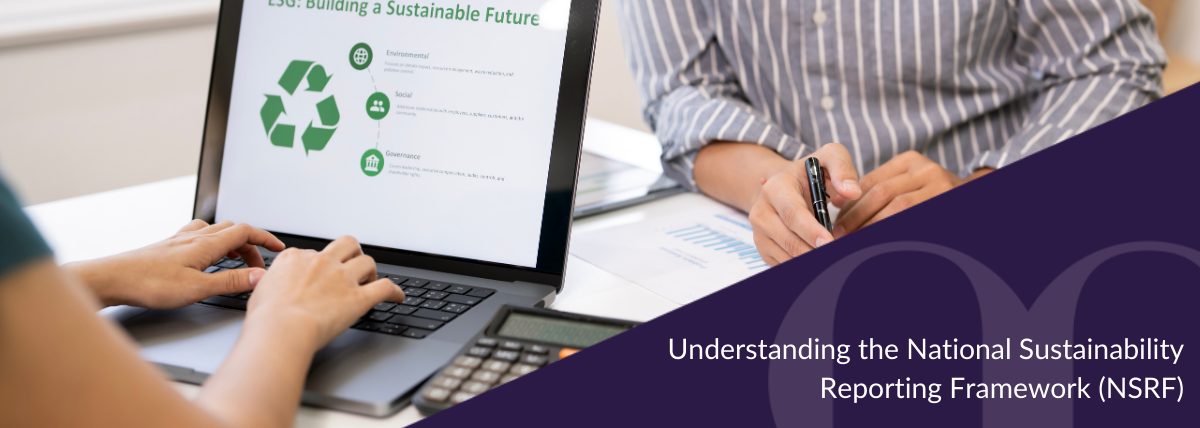
On 24 September 2024, Malaysia launched the National Sustainability Reporting Framework (NSRF) to guide companies in disclosing environmental, social, and governance (ESG) performance in a clear, consistent, and globally aligned way. Developed in response to growing regulatory and investor expectations, the NSRF supports Malaysia’s shift towards sustainable business practices and reflects international benchmarks, including the standards of the International Sustainability Standards Board (ISSB)—specifically IFRS S1, which covers general sustainability-related disclosures, and IFRS S2, which focuses on climate-related risks and opportunities.

In this article, we will break down the NSRF, its relevance to Malaysian businesses, and the steps companies can take to align with the sustainability reporting framework and meet evolving ESG requirements.

What is the National Sustainability Reporting Framework (NSRF)?

The national sustainability reporting framework provides a structured approach for Malaysian companies to disclose ESG-related risks, opportunities, and performance. It sets out clear reporting expectations, aiming to build trust and accountability while helping organisations stay competitive in a rapidly evolving market.

By aligning closely with global frameworks such as the ISSB standardsIFRS S1, and IFRS S2, the NSRF ensures Malaysian companies can meet both local compliance obligations and international investor expectations.

The Role of the NSRF in Malaysia’s ESG Landscape

The NSRF plays a central role in Malaysia’s broader ESG strategy, complementing both the Malaysia ESG framework and the SSA framework developed by Bursa Malaysia. It integrates key global reporting references, including the UN Sustainable Development Goals (SDGs), the Global Reporting Initiative (GRI), and the Task Force on Climate-Related Financial Disclosures (TCFD). 

To support digital and standardised reporting, Bursa Malaysia has also introduced the Centralised Sustainability Intelligence (CSI) platform, which is the official platform for submitting ESG disclosures under the sustainability reporting framework.

Additionally, leading providers work in close collaboration with Bursa Malaysia to support companies with ESG reporting, offering practical guidance on data preparation and platform submission for ongoing compliance.

Who Needs to Comply with the NSRF?

The NSRF applies to a wide range of organisations in Malaysia, from listed issuers to large non-listed entities. While initial adoption may be voluntary for some, compliance is gradually becoming mandatory across company tiers, in line with national ESG objectives.

Phased Implementation

The rollout of the NSRF follows a structured, three-year timeline: 

  • 2025: Large Main Market issuers with a market capitalisation of RM2 billion or more 
  • 2026: All other Main Market issuers 
  • 2027: ACE Market issuers and large non-listed companies 

This phased approach allows businesses time to build internal capabilities and integrate ESG reporting into existing operations.

Why Does the NSRF Matter for Malaysian Businesses?

Enhancing Corporate Sustainability

The NSRF encourages organisations to embed sustainability into their business strategies. By reporting on emissions, resource consumption, and labour practices, companies can identify operational risks and set measurable improvement targets. This also supports broader national priorities such as climate adaptation and low-carbon development.

Building Stakeholder Trust

Investors, regulators, and consumers now expect transparency in ESG performance. A well-prepared sustainability report in Malaysia can strengthen credibility and demonstrate commitment to long-term value creation. The NSRF gives companies a standardised way to communicate ESG efforts, improving trust and stakeholder engagement.

Staying Competitive in a Global Market

Alignment with IFRS S1, IFRS S2, and the broader ISSB standards allows Malaysian companies to meet the expectations of global investors and business partners. This positions them more favourably in cross-border transactions, especially in sectors where ESG reporting is a key part of procurement or partnership decisions.

Supporting Malaysia’s Net-Zero Goals

As part of its national low-carbon roadmap, Malaysia has committed to achieving net-zero emissions by 2050. The NSRF contributes to this by helping companies track and disclose climate data, ultimately improving the quality and availability of climate reporting at the national level.

Key Requirements of the NSRF

Core Components of the Sustainability Reporting Framework

The sustainability reporting framework requires companies to report across three ESG pillars: 

  • Environmental: Carbon emissions, energy use, waste management, water efficiency 
  • Social: Labour practices, diversity and inclusion, employee well-being 
  • Governance: Board diversity, ethics policies, anti-corruption measures 

These indicators enable stakeholders to assess both risk exposure and the company’s long-term sustainability strategy.

Reporting Standards and Guidelines

The NSRF aligns closely with international frameworks such as the GRI, Sustainability Accounting Standards Board (SASB), and ISSB standards. In particular, IFRS S1 outlines general sustainability-related disclosures, while IFRS S2 focuses on climate reporting. Companies are expected to reference these standards in developing their sustainability report in Malaysia.

Templates and guidance documents are available through Bursa Malaysia, designed to standardise reporting formats and improve comparability.

Data Collection and Documentation

Accurate data collection is central to effective ESG reporting. Companies need to gather quantitative and qualitative data from across departments, including environmental performance metrics, HR records, and board governance disclosures. Transparency and consistency are key to avoiding greenwashing concerns.

Centralised Sustainability Intelligence (CSI) Platform

Bursa Malaysia’s CSI platform is the designated system for submitting NSRF reports. It facilitates centralised data uploads, real-time analytics, and benchmarking tools, improving the quality and efficiency of climate reporting. Adoption of the CSI platform is mandatory for all reporting entities under the framework.

Compliance Deadlines and Reporting Frequency

Reporting frequency is expected to be annual, timed to follow financial year cycles. Companies must submit their sustainability report in Malaysia by the deadline specified under the NSRF, depending on their categorisation. Non-compliance may affect listing status or trigger regulatory scrutiny.

Steps to Start Sustainability Reporting Under the NSRF

Understand the Framework

Begin by reviewing the national sustainability reporting framework, including its timelines, reporting templates, and guidance documents. Identify your organisation’s ESG priorities and align them with the reporting requirements under IFRS S1 and IFRS S2.

Build Internal Capacity

Form a sustainability working group or appoint an ESG officer to oversee data collection and compliance. Training sessions can help operational teams become familiar with reporting expectations, risk areas, and the importance of accurate climate reporting.

Invest in Technology and Tools

Digital tools play a key role in managing ESG disclosures. ESG software can simplify data consolidation, generate reports based on ISSB standards, and facilitate submission through the CSI platform. Some platforms now incorporate AI features that assist with data mapping, flagging inconsistencies, and generating draft narrative content aligned with IFRS S1 and IFRS S2, supporting a more efficient and accurate reporting process.

Engage Stakeholders

Communicate your sustainability goals and reporting commitments to key stakeholders. This includes internal teams, shareholders, regulators, and customers. Businesses may also consider engaging third-party consultants or ESG specialists to improve reporting quality and navigate regulatory requirements.

Submit and Monitor Reports

Once data is compiled and validated, submit it via the CSI platform according to your reporting schedule. Post-submission, track performance against industry benchmarks and update your ESG strategy based on stakeholder feedback.

Next Steps for Climate Reporting Under the NSRF

The national sustainability reporting framework marks a turning point for companies operating in Malaysia, particularly as investor scrutiny and regulatory requirements continue to rise. With the phased rollout already underway, businesses need to prioritise ESG readiness—not just to remain compliant, but to stay competitive in a shifting global landscape.

As sustainability reporting becomes more technical and time-sensitive, having the right support can significantly ease the process.

Partnership with BoardRoom

BoardRoom Malaysia offers tailored support to businesses preparing for the NSRF, particularly through our SSA-related services. In collaboration with Bursa Malaysia, we provide expert guidance on ESG disclosure, regulatory compliance, and platform submission via the CSI platform. 

Whether you’re developing your first sustainability report in Malaysia or looking to improve existing practices, we help streamline the reporting journey—from early planning through to final publication. Get in touch with us here at BoardRoom Malaysia to explore how we can support your next reporting cycle.

Contact BoardRoom for more information:

Chong Kok Wai

Chong Kok Wai

Regional Director of Sustainability

E: [email protected]

Related Business Insights

An Essential Guide to Hybrid Annual General Meetings (AGMs)

An Essential Guide to Hybrid Annual General Meetings (AGMs)

An Essential Guide to Hybrid Annual General Meetings (AGMs)

As the corporate landscape continues to evolve, companies across Malaysia are rethinking how they conduct their annual general meetings (AGMs). The global pandemic accelerated digital adoption, making it clear that flexible, technology-driven solutions are not just convenient but also essential. Enter the hybrid AGM, a format that merges the best of both physical and virtual general meetings to meet the needs of diverse shareholders.

This guide explores what makes a hybrid AGM work, how technology plays a pivotal role in AGM management, and what organisations should prioritise to host effective and compliant AGM meetings in 2025 and beyond.

What is a Hybrid AGM?

A hybrid AGM allows shareholders to participate either in person or online. While physical AGMs may still appeal to some stakeholders, the hybrid AGM model has emerged as a more inclusive format, giving shareholders flexibility without compromising engagement or compliance.

Why Hybrid?

The appeal lies in its balance. Physical attendance allows face-to-face interaction, while the virtual component widens access to shareholders who are unable to be present due to geography, mobility, or other constraints.

In Malaysia, the acceptance of virtual general meetings by regulators such as the Companies Commission of Malaysia and the Securities Commission has made the hybrid AGM a compliant and forward-thinking option for listed and non-listed companies alike.

Key Benefits

  • Wider Participation: Shareholders from different regions or even overseas can join via online AGM platforms without the need to travel. 
  • Cost Efficiency: Reduced spending on venue logistics, printed materials, and travel arrangements. 
  • Enhanced Shareholder Experience: Technology-enabled engagement tools such as live polling and Q&As create an interactive environment that’s accessible to all attendees.

Technology as the Backbone of Hybrid AGMs

At the core of a successful hybrid AGM is the right technology. It needs to facilitate smooth communication, secure participation, and real-time decision-making—without fail.

Must-Have Features in AGM Technology

To support a modern AGM meeting, companies should look for platforms that offer: 

  • Real-time Polling and Voting: Integrated systems that allow for secure and transparent shareholder voting, both onsite and online. 
  • High-Quality Live Streaming: Reliable video and audio tools that ensure all shareholders, regardless of location, can follow proceedings without disruption. 
  • Interactive Q&A Functions: Moderated channels that allow shareholders to submit questions live, ensuring inclusive participation. 

Platform Selection Considerations

When choosing a hybrid AGM platform, consider: 

  • Security and Compliance: Look for features like multi-factor authentication, encrypted voting, and audit trails. In Malaysia, platforms should also meet the requirements set by Bursa Malaysia and the Companies Act 2016. 
  • Scalability: Whether you’re managing 200 or 20,000 shareholders, your system must perform at scale without lag or downtime. 
  • Accessibility: Features like mobile compatibility and language support can make a big difference for shareholders with varied needs. 

Partnering with a provider that offers comprehensive shareholder meeting services can help streamline the entire process, from secure voting to shareholder communications and post-meeting reporting, making it easier to manage both compliance and engagement.

The Role of Polling Devices and E-Voting

Modern AGM meetings require poll voting processes that are fast, secure, and transparent. Hybrid formats make this more complex, as votes must be accurately synchronised between in-person devices and online AGM participants.

Reliable poll voting services support real-time results, protect voter anonymity, and verify participation across channels, helping companies uphold integrity and confidence in decision-making.

Reliability and Technical Assurance

Technical hiccups during a virtual general meeting can disrupt participation and damage shareholder trust. Choosing a platform with strong connectivity, real-time system monitoring, and access to live technical support is essential for a smooth experience.

Preparation is equally important. Conduct a mock AGM meeting to test the platform, refine the agenda, and identify potential issues in advance. This gives organisers and attendees greater confidence going into the live session.

Best Practices for Hosting Hybrid AGMs

A smooth hybrid AGM relies on clear processes, not just reliable tools. From preparation to post-meeting tasks, every detail plays a part in meeting expectations and staying compliant.

Plan Strategically

Prepare detailed agendas in advance and share them with shareholders. Confirm the quorum requirements for hybrid formats and take note of any regulatory updates from the Securities Commission Malaysia.

Cybersecurity & Data Protection

Shareholder data is sensitive. Companies must use platforms that offer encrypted communication, secure login protocols, and access controls. Staff should be trained to recognise phishing threats or suspicious activities.

Make It Accessible

Even the best platform falls short if shareholders can’t navigate it. Clear instructions, basic tech support, and tools like e-voting and live Q&A help online AGM participants stay fully engaged.

Support on the Day

Both on-site and virtual IT support help avoid disruptions during a hybrid AGM. Technical issues can quickly escalate into governance concerns, so rehearsals or mock meetings are useful for identifying and resolving risks early.

Accurate Records and Reporting

Meeting records must be complete, accurate, and submitted on time to meet regulatory requirements. This includes formal minutes, resolutions passed, and post-meeting reports, all of which may be subject to audit or review.

The Future of Hybrid AGMs

Hybrid meetings are no longer a stopgap; they’re becoming a core practice in modern corporate governance. As expectations grow, so must the way companies connect with shareholders.

Greater Inclusivity

Online AGM tools make it easier for minority and retail shareholders to participate. Mobile-friendly platforms, language options, and remote voting help create a more balanced and representative shareholder voice.

Cost and Environmental Gains

By reducing venue, travel, and printing costs, hybrid formats offer real savings. Going digital also supports ESG efforts by cutting down on emissions and paper use linked to traditional AGM meetings.

Evolving Technologies

The integration of artificial intelligence (AI) is already underway in some AGM management platforms. Features like automated transcription, data analytics, and sentiment tracking during Q&As are enhancing how companies capture insights from their meetings.

Future-Proofing Governance

Companies that adopt secure, transparent hybrid formats are better positioned to build shareholder trust and meet future regulatory expectations. In time, hybrid AGM structures may well become the industry standard—not the exception.

Plan Your Next Online AGM with Confidence

The future of corporate governance in Malaysia is hybrid, and businesses that adapt early stand to gain the most. With the right mix of planning, technology, and stakeholder engagement, a hybrid AGM can be as effective—if not more so—than a traditional meeting format. 

Partnering with an experienced provider like BoardRoom Malaysia means more than just having the tools in place. It means having a dedicated team with deep knowledge of AGM management, regulatory compliance, and shareholder engagement. Whether you’re hosting your first online AGM or refining your existing setup, the path to a seamless, inclusive AGM meeting starts with trusted expertise. Contact us today to get started! 

Contact BoardRoom for more information:

Jonathan Lim

Jonathan Lim

Managing Director Asia, Share Registrar Services

E: [email protected]

Related Business Insights

Regularising the Past: The 2026 Stamp Duty Voluntary Disclosure Program

Regularising the Past: The 2026 Stamp Duty Voluntary Disclosure Program

Regularising the Past: The 2026 Stamp Duty Voluntary Disclosure Program

The Stamp Act 1949 (“Act”) has long served as a foundational element of Malaysia’s tax landscape, and, like all enduring legislation, it evolves to meet contemporary needs. In recent developments, the introduction of the Stamp Duty Self-Assessment System (“SDSAS”) has been on everyone’s mind – starting with Phase 1 kicking off on 1 January 2026. With this new system, taxpayers are required to first categorise their instruments according to the First Schedule of the Act, then independently and accurately determine the rate payable to the Collector and subsequently make such payments to the Collector upon filing their stamp duty return on SDSAS. This represents a marked departure from the previous framework, under which taxpayers were only required to submit their instruments online for the Collector to adjudicate and issue an official assessment notice specifying the stamp duty due – upon which the taxpayers would make payment.

With such a significant change within the stamp duty framework, the Inland Revenue Board (“IRB”) has introduced the Voluntary Disclosure Program (“VDP”).The VDP is aimed to facilitate the transition between the past framework and the newly implemented system, acting as an automatic blanket exemption for all eligible taxpayers. However, it is important to note that this program and the exemptions that come along with it would only be available for 6 months from 1 January 2026 to 30 June 2026 for instruments executed between year 2023 to year 2025.

Many taxpayers have asked why the Stamp Duty Voluntary Disclosure Programme (VDP) applies only to instruments executed between 2023 and 2025, and whether documents executed prior to 2023 fall outside stamp duty exposure.

During a recent dialogue session with CTIM members, the Director General of Inland Revenue (“DGIR”) verbally indicated that, as a matter of administrative practice, the Inland Revenue Board (“IRB”) generally audits stamp duty compliance for a period of up to three years only. This administrative approach is broadly aligned with the IRB’s general audit framework.

However, it is important to note that, legally, the Stamp Act 1949 provides a time bar of five years for the assessment and recovery of deficient stamp duty. The DGIR also clarified that instruments executed prior to 2023 are not exempt from stamp duty.

Stamp duty remains legally payable under the Act as there is no remission or exemption order granting a blanket exemption for such instruments. A blanket exemption would potentially require refunds to be made to taxpayers who have already paid duty, which is not the current policy approach. Accordingly, while instruments executed before 2023 may, in practice, be less likely to be subject to audit under current IRB administrative practice, they remain legally chargeable to stamp duty.

Our view is that the three-year scope reflects the IRB’s current administrative practice rather than a limitation imposed by legislation, and such practice is not legally binding nor guaranteed to remain unchanged. Taxpayers should therefore assess their exposure based on statutory provisions rather than solely on current audit practice.

The overarching principle of the Act is that every instrument must be stamped at the prescribed rate. In practice, many taxpayers fall foul of the late-stamping provisions, rendering them liable under Section 47A of the Act. However, non-compliance not only attracts penalties imposed by the Collector, but also carries the more serious consequence that an unstamped document may be inadmissible as evidence in court, potentially undermining a party’s claims or defences should a dispute arise.

Specifically, under Section 47 of the Act, taxpayers are required to file a stamp duty return and ensure stamp duty payable is made within 30 days of the date of execution in Malaysia or the date of receipt in Malaysia, and failure to do so would attract penalties. Subsequently, Section 47A of the Act sets out the penalties for late stamping, whereby the “late” taxpayer would be subject to fifty ringgit (RM50) or ten percent (10%) of the amount of the unpaid duty if the instrument is stamped within three (3) months after the time for stamping, or one hundred ringgit (RM100) or twenty percent (20%) of the amount of the unpaid duty, whichever sum is greater in both cases.

Under Section 47A(2) of the Act, the Collector has the power to remit or reduce the amount of duty payable. Hence, the Collector has introduced the VDP to grant a remission period for eligible taxpayers, which applies to instruments executed between 1 January 2023 and 31 December 2025. For the VDP to apply, it is exclusive to taxpayers who have duly executed and stamped the relevant instruments, but have not paid the stamp duty. However, if the taxpayer has had the instrument stamped and the duty paid, then the VDP does not apply to such parties. Given that the VDP is designed as an automatic blanket exemption, those eligible are not required to file appeals of any sort, and the system will automatically display that the payment for duty is waived.

With the introduction of the SDSAS, the likelihood of the Collector “rejecting” a taxpayer’s submission may increase. Accordingly, taxpayers should be aware of the appeals process in the event of any dispute or dissatisfaction with an assessment by the Collector. Where a taxpayer disagrees with the Collector’s assessment, the taxpayer may, within thirty (30) days from the date of the assessment, lodge a written notice of objection with the Collector. Upon determination of the objection, the Collector shall notify the taxpayer in writing of the decision. If the taxpayer remains dissatisfied with the Collector’s decision, the taxpayer may, within twenty-one (21) days from the date of notification, appeal the decision to the High Court.

The VDP can be seen as a nudge from the Collector to the taxpayers, a nudge forward in the direction of modernity through the SDSAS. Therefore, the bottom-line of the VDP is that it is introduced to encourage taxpayers to independently file, stamp and pay for their instruments in the future, fostering a culture of compliance and individual integrity under the SDSAS.

This article was originally published by Zaid Ibrahim & Co.

Related Business Insights